
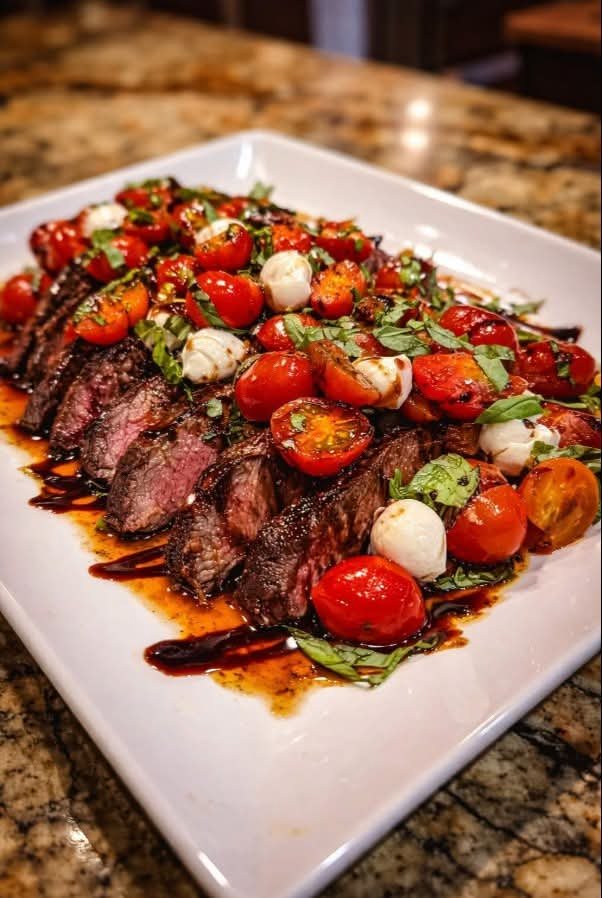
Grilled Balsamic Steak Caprese with Fresh Mozzarella, Juicy Tomatoes, and Basil
There is something special about a dish that brings together the bold, smoky flavor of a perfectly grilled steak with the bright, fresh character of a classic Italian caprese salad. Grilled balsamic steak caprese does exactly that. It transforms the traditional tomato, mozzarella, and basil combination into a hearty main course that works beautifully for summer cookouts, weeknight dinners, or an impressive meal for guests. In this guide, you will learn how to choose the right cut of beef, marinate it for maximum flavor, grill it to ideal doneness, and assemble a stunning caprese plate with fresh mozzarella, juicy tomatoes, and fragrant basil.
Why Grilled Balsamic Steak Caprese Works
Caprese salad is a celebration of simplicity. Ripe tomatoes, creamy mozzarella, fresh basil, good olive oil, and a drizzle of balsamic glaze let each ingredient shine. Adding grilled steak turns this light appetizer into a complete, protein-rich meal without sacrificing the freshness that makes caprese so appealing.
The balsamic element ties the dish together. Balsamic vinegar adds sweetness, acidity, and depth, which complement the richness of beef and the mild creaminess of fresh mozzarella. When the steak is marinated in a balsamic blend and then finished with a reduced balsamic glaze, every bite carries a balance of savory, tangy, and sweet notes.
This recipe is also highly adaptable. You can serve it as a warm-weather meal on a platter, plate it individually for a dinner party, or slice the steak over a bed of arugula for a more substantial salad. It pairs well with crusty bread, grilled vegetables, and a crisp glass of Chianti or a chilled rosé.
Choosing the Right Cut of Steak
The success of this dish begins with the steak. Tender, well-marbled cuts that perform well on a hot grill are the best choice. Here are several excellent options:
– Ribeye: Known for rich marbling and deep beefy flavor, ribeye stays juicy on the grill and is a premium choice for entertaining.
– New York strip: This cut offers a firm texture, a good fat cap, and a robust flavor that stands up well to balsamic marinades.
– Flank steak: A leaner, budget-friendly option that becomes wonderfully tender when marinated and sliced thinly against the grain.
– Sirloin: A versatile, moderately priced cut that is lean but flavorful when cooked properly.
For a thick, satisfying presentation, aim for steaks that are about one inch to one and a half inches thick. This thickness gives you enough margin to develop a flavorful sear on the outside while keeping the center juicy.
Creating the Balsamic Marinade
A good marinade is the foundation of flavorful grilled steak. For this recipe, combine the following ingredients in a bowl or resealable bag:
– 1/3 cup balsamic vinegar
– 3 tablespoons extra virgin olive oil
– 2 cloves garlic, finely minced
– 1 tablespoon Dijon mustard
– 1 teaspoon dried Italian herbs or fresh rosemary, finely chopped
– 1 teaspoon honey or brown sugar to balance the acidity
– Salt and freshly ground black pepper to taste
Whisk the ingredients together until emulsified. Place the steaks in the marinade, making sure both sides are coated evenly. Cover and refrigerate for at least 30 minutes and up to four hours. Avoid marinating longer than necessary, as the acidity in balsamic vinegar can begin to alter the texture of the meat if left for too long.
Before grilling, remove the steaks from the refrigerator about 30 minutes early so they can come closer to room temperature. This helps them cook more evenly. Pat the surface lightly with paper towels to remove excess marinade, which can cause flare-ups on the grill.
Grilling the Steak to Perfection
Preheat your grill to high heat, around 450 to 500 degrees Fahrenheit. Clean the grates thoroughly and oil them lightly to prevent sticking. Season the steaks generously with coarse salt and black pepper just before they hit the grill.
Place the steaks on the hottest part of the grill and cook for about three to four minutes per side for medium-rare, depending on thickness. Resist the urge to move the steak around constantly; allowing it to sit undisturbed creates those coveted grill marks and a flavorful crust.
The most reliable way to judge doneness is with an instant-read meat thermometer. Remove the steak from the grill when it reaches these internal temperatures:
– Rare: 120 to 125 degrees Fahrenheit
– Medium-rare: 130 to 135 degrees Fahrenheit
– Medium: 140 to 145 degrees Fahrenheit
– Well-done: 160 degrees Fahrenheit and above
Always let the steak rest for at least five to ten minutes after grilling. Resting allows the juices to redistribute throughout the meat instead of spilling onto your cutting board. Tent the steak loosely with foil during this time to keep it warm.
Preparing Fresh Mozzarella and Juicy Tomatoes
While the steak rests, turn your attention to the caprese components. The quality of your mozzarella and tomatoes will make a noticeable difference.
For mozzarella, look for fresh mozzarella packed in water, such as fior di latte or mozzarella di bufala if you can find it. Drain it well, pat it dry, and slice it into rounds about one-quarter inch thick. Fresh mozzarella is delicate, so handle it gently.
For tomatoes, choose ripe, flavorful varieties such as heirloom, beefs