
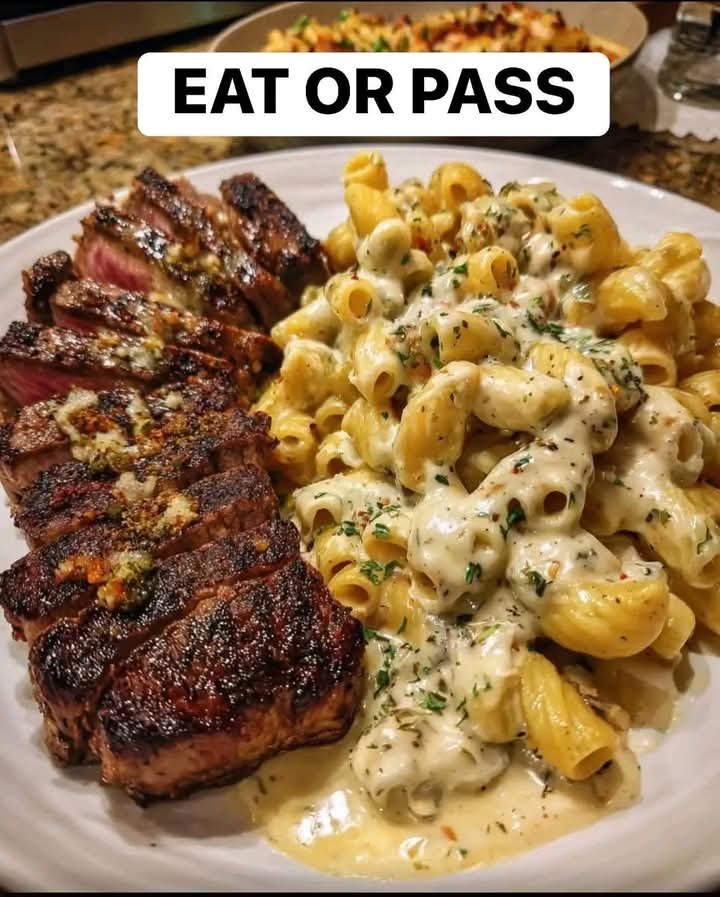
Garlic butter steak with creamy garlic Parmesan pasta is the kind of dinner that feels like a restaurant meal but comes together in your own kitchen in about 40 minutes. A well-seared steak, basted in foaming garlic butter and served alongside tender short pasta coated in a rich Parmesan cream sauce, makes a generous plate that works for a weeknight treat or a relaxed weekend dinner. This recipe is built for two to three people and uses only a handful of pantry staples plus a good cut of beef.
What makes this dish work is the balance of contrasts. The steak gets a hard sear and a quick baste in garlic and herbs, while the pasta sauce stays gentle and creamy with a little heat from red pepper flakes. Nothing here is complicated, but a few timing decisions make the difference between good and great, and those are explained step by step below.
Why you’ll love this garlic butter steak and pasta
- It delivers a restaurant-style two-part dinner using one skillet for the steak and one for the sauce.
- The garlic butter basting gives the steak a deep, savory crust that is hard to achieve with seasoning alone.
- The creamy garlic Parmesan sauce comes together in under five minutes and clings beautifully to short pasta shapes.
- Prep is quick at about 15 minutes, so the whole meal is ready in roughly 40 minutes from start to finish.
- Both components are easy to scale up or down, making it a practical choice for date night or a small family dinner.
Ingredients
Servings: 2-3 | Prep time: 15 minutes | Cook time: 25 minutes
- 2 sirloin or ribeye steaks (about 1 lb total), 1 inch thick
- 1 tbsp olive oil
- Salt and black pepper
- 1 tsp smoked paprika
- 4 tbsp butter, divided
- 6 cloves garlic, minced, divided
- 1 tbsp chopped parsley plus extra for garnish
- 1 sprig thyme or rosemary
- 8 oz short tubular pasta (pipette or macaroni)
- 1 cup heavy cream
- 1/2 cup grated Parmesan
- 1/2 tsp Italian seasoning
- 1/4 tsp red pepper flakes
- 1/2 cup reserved pasta water as needed
Choose steaks with good marbling, since the fat carries flavor and keeps the meat juicy when cooked fast over high heat. Sirloin is more affordable and lean, while ribeye is richer and more forgiving. Buy a real block of Parmesan and grate it yourself; pre-grated cheese often contains anti-caking agents that can make the sauce grainy. Use fresh garlic and fresh herbs where possible, because they give the butter and cream a brighter, more aromatic character than dried versions.
Instructions
- Season the steaks. Pat the steaks completely dry with paper towels, then season them generously with salt, black pepper and smoked paprika. Dry meat browns far better than damp meat, so do not skip this step.
- Sear the steaks. Heat the olive oil in a heavy skillet over high heat until it shimmers. Sear the steaks for 3-4 minutes per side for medium-rare, without moving them, so a deep crust forms.
- Baste with garlic butter. Add 2 tbsp butter, 3 cloves minced garlic and the thyme or rosemary sprig to the pan. Tilt the pan and spoon the foaming butter over the steaks for the last minute of cooking.
- Rest and slice. Transfer the steaks to a board and rest them for 8-10 minutes so the juices redistribute. Slice against the grain and spoon the garlic butter from the pan over the top.
- Cook the pasta. While the steaks rest, bring a large pot of generously salted water to a boil and cook the pasta until al dente. Before draining, reserve 1/2 cup of the starchy pasta water.
- Saute the garlic. In a clean skillet, melt the remaining 2 tbsp butter over medium heat. Add the remaining 3 cloves of garlic and cook for 30-60 seconds, just until fragrant and not browned.
- Simmer the cream. Pour in the heavy cream, then add the Italian seasoning and red pepper flakes. Simmer gently for 3-4 minutes until the sauce thickens slightly and coats the back of a spoon.
- Add the Parmesan and pasta. Stir in the grated Parmesan until the sauce is smooth. Toss in the drained pasta and add reserved pasta water a splash at a time until the sauce loosens to a silky consistency.
- Finish and serve. Stir in the chopped parsley and a few grinds of black pepper, and top with extra Parmesan. Serve the pasta with the sliced garlic butter steak on the side.
Tips for the best results
- Bring the steaks to near room temperature for about 20 minutes before searing, so the centers cook more evenly.
- Use a meat thermometer: aim for 130°F (54°C) for medium-rare or 145°F (63°C) for medium, and remember the temperature will rise a few degrees while resting.
- Keep the heat moderate when adding the garlic to butter, since garlic burns quickly and turns bitter at high temperatures.
- Do not let the cream come to a hard boil, which can cause it to separate or turn grainy once the cheese goes in.
- Add the pasta water gradually; it is easy to make the sauce too thin, but you can always add more.
- Season the pasta water well, because the pasta absorbs its salt and that is the main source of seasoning for the dish.
Variations and substitutions
- Different steak cut: Filet mignon or strip steak works well; just reduce the sear time for thinner cuts and check the internal temperature.
- Other pasta shapes: Rigatoni, penne or cavatappi hold the creamy sauce nicely if you cannot find pipette or macaroni.
- Dairy-free adjustment: A full-fat plant-based cream and a dairy-free hard cheese alternative can approximate the sauce, though the flavor and texture will differ.
- Extra greens: Stir in a few handfuls of baby spinach at the end of the sauce step for color and a fresh bite.
- Spice level: Increase the red pepper flakes for more heat, or leave them out entirely for a milder, family-friendly version.
Serving suggestions
Serve the sliced steak fanned out on warm plates with the creamy pasta piled beside it, so each forkful can combine the two. Spoon any remaining garlic butter from the pan over the steak just before serving for extra shine and flavor. A simple green salad with a sharp vinaigrette cuts through the richness of the cream and butter, while roasted broccoli or green beans add a fresh, crisp contrast. A crusty baguette is ideal for mopping up every bit of the sauce, and a medium-bodied red wine such as Chianti or a Pinot Noir pairs well with the beef and Parmesan.
Storage and reheating
Store leftover steak and pasta in separate airtight containers in the refrigerator for up to three days. The cream sauce can thicken considerably when chilled, so plan to add a splash of milk or water when reheating. Warm the pasta gently in a skillet over low heat, stirring until it is hot and the sauce is smooth again. Reheat the steak briefly in a pan with a little butter, or eat it cold in salads and sandwiches, and avoid overcooking it in the microwave, which tends to toughen the meat.
Frequently asked questions
What is the best steak for garlic butter steak?
Ribeye and sirloin are both excellent choices because they have good marbling and a rich beefy flavor. Ribeye is more tender and juicy, while sirloin is leaner and more budget-friendly. Look for steaks about 1 inch thick so they sear well on the outside without overcooking inside.
Can I make the creamy garlic Parmesan pasta ahead of time?
You can prepare the sauce a few hours ahead, but it is best made fresh because cream sauces thicken and can separate as they sit. If you need to make it in advance, store it covered and reheat it gently over low heat, adding pasta water or a splash of cream to loosen it before tossing in the pasta.
How do I keep the steak from overcooking?
Use a meat thermometer and pull the steak off the heat when it reaches about 5 degrees below your target temperature, since it will continue to rise while resting. Resting for 8-10 minutes is essential, and cutting into it too early will let the juices run out.
Why did my Parmesan sauce turn grainy?
Grainy sauce usually happens when the cream boils too hard or the cheese is pre-grated and contains anti-caking agents. Keep the heat low once the cream is simmering, add the cheese off the heat or on very low heat, and grate a fresh block of Parmesan for the smoothest result.
Can I cook this dish without a heavy skillet?
A heavy stainless steel or cast iron skillet is ideal because it holds heat well for a strong sear. A thinner pan will still work, but you may need to cook the steak in batches or accept a lighter crust, since the temperature drops quickly when cold meat hits the surface.
Final thoughts
Garlic butter steak with creamy garlic Parmesan pasta is a dinner that rewards a little attention to searing, resting and sauce timing, but none of the steps are difficult once you know what to look for. Make it for someone you want to impress, or simply treat yourself on an ordinary weeknight. Gather the ingredients, follow the steps, and enjoy the first bite of a juicy steak and a silky, garlicky pasta that tastes like a special occasion.