
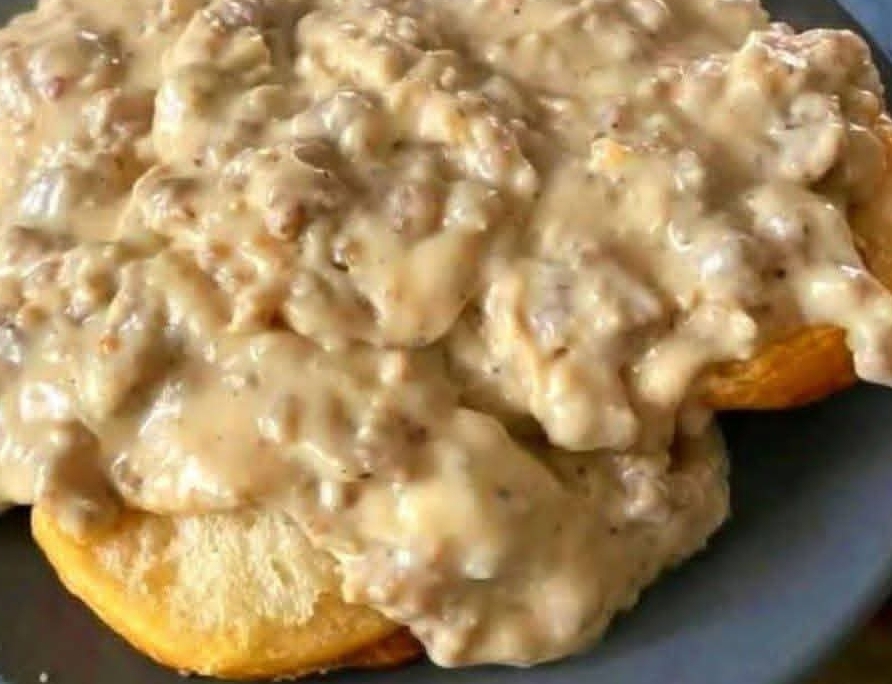
Classic Southern Biscuits and Sausage Gravy
Biscuits and gravy is a cornerstone of American Southern breakfast cooking. Flaky, buttery biscuits are split open and smothered in a thick, peppery white gravy studded with crumbled breakfast sausage. The dish is hearty, comforting, and surprisingly simple once you understand a few key techniques. The version below yields 8 generous servings (about 16 biscuits and enough gravy to cover them generously). Total active time is roughly 45–55 minutes; total time including resting is about 1 hour 15 minutes.
Ingredients
For the Buttermilk Biscuits (makes 16 biscuits)
- 4 cups (500 g) all-purpose flour, plus extra for dusting
- 2 tablespoons baking powder
- 1 teaspoon baking soda
- 1½ teaspoons kosher salt
- 2 tablespoons granulated sugar (optional but helps browning and flavor)
- 1 cup (226 g) cold unsalted butter, cut into ½-inch cubes
- 1½–1¾ cups (360–420 ml) cold full-fat buttermilk
- 2 tablespoons melted butter for brushing
For the Sausage Gravy
- 1 pound (450 g) bulk pork breakfast sausage (mild or hot; avoid pre-cooked links)
- ⅓ cup (40–45 g) all-purpose flour
- 4 cups (960 ml) whole milk, room temperature preferred
- 1 teaspoon freshly ground black pepper (or more to taste)
- ½–¾ teaspoon kosher salt (adjust after tasting; sausage is already salty)
- Optional but recommended: ¼ teaspoon cayenne pepper or a pinch of red-pepper flakes, ½ teaspoon garlic powder, ½ teaspoon onion powder
- Optional enrichment: 2 tablespoons unsalted butter if the sausage renders very little fat
Equipment
Large mixing bowl, pastry blender or two knives (or food processor), rolling pin or clean hands, 2½- or 3-inch biscuit cutter, baking sheet lined with parchment, large heavy-bottomed skillet (cast-iron preferred), whisk, wooden spoon.
Step-by-Step Instructions
1. Prepare the biscuit dough (15–20 minutes + 15-minute rest)
Preheat the oven to 450 °F (230 °C) and position a rack in the upper third. In a large bowl whisk together the flour, baking powder, baking soda, salt, and sugar. Add the cold butter cubes. Using a pastry blender, two knives, or your fingertips, cut the butter into the flour until the mixture resembles coarse crumbs with some pea-sized pieces remaining. The visible butter pieces are what create flaky layers; do not overwork.
Make a well in the center and pour in 1½ cups cold buttermilk. Stir with a fork just until a shaggy dough forms. If it looks too dry, add the remaining buttermilk 1 tablespoon at a time. Turn the dough onto a lightly floured surface and gently knead 4–6 times—just enough to bring it together. Pat or roll into a rectangle about ¾–1 inch thick. Fold the dough in thirds like a letter, rotate 90 degrees, and pat out again. Repeat this fold once more. This simple lamination creates extra layers.
Cut straight down with a floured biscuit cutter; do not twist, or the sides will seal and the biscuits will not rise tall. Gather scraps gently, re-pat, and cut more biscuits. Place them on the parchment-lined sheet so they are almost touching (they help each other rise). Brush the tops with melted butter. Rest the cut biscuits in the refrigerator for 15 minutes while the oven finishes heating; this firms the butter and improves rise.
2. Bake the biscuits (12–15 minutes)
Bake until the tops are golden brown and the bottoms are lightly browned, 12–15 minutes. Rotate the pan halfway through if your oven has hot spots. Remove and brush again with a little melted butter if desired. Keep warm.
3. Make the sausage gravy (20–25 minutes)
While the biscuits bake, place a large skillet over medium heat. Add the bulk sausage and break it into small crumbles with a wooden spoon. Cook, stirring occasionally, until no pink remains and the edges are beginning to brown, 8–10 minutes. Do not drain the fat—this is the flavor base of the gravy. If the sausage is extremely lean and has rendered less than 3–4 tablespoons of fat, add the optional 2 tablespoons butter and let it melt.
Sprinkle the flour evenly over the cooked sausage. Stir constantly for 1–2 minutes to cook out the raw flour taste and form a light roux. The mixture will look pasty. Slowly pour in about 1 cup of the milk while whisking vigorously to prevent lumps. Once smooth, add the remaining milk in a steady stream, continuing to whisk. Bring the gravy to a gentle simmer, then reduce heat to medium-low. Cook, stirring frequently, until the gravy thickens enough to coat the back of a spoon, 5–8 minutes. It will continue to thicken slightly as it cools, so aim for a consistency a bit thinner than you ultimately want.
Season with the black pepper, salt, and any optional spices. Taste and adjust—good sausage gravy should be boldly peppery. If it becomes too thick, thin with a splash of milk. If it is too thin, simmer a few minutes longer or make a small slurry of 1 teaspoon flour mixed with 2 tablespoons cold milk and stir it in.
4. Assemble and serve
Split warm biscuits horizontally. Ladle a generous amount of hot sausage gravy over the bottom halves, replace the tops, and spoon more gravy over everything. Serve immediately. A side of scrambled eggs, fried eggs, or fresh fruit balances the richness.
Tips for Success and Troubleshooting
- Keep everything cold for the biscuits. Warm butter melts too soon and produces dense, flat results.
- Do not overmix the biscuit dough; tough biscuits are the most common failure.
- Freshly ground black pepper makes a noticeable difference in the gravy.
- If the gravy breaks or becomes greasy, whisk in a little more milk off the heat.
- For make-ahead: Bake biscuits up to one day ahead and reheat at 350 °F for 5–7 minutes. Gravy can be made a day ahead, refrigerated, and reheated gently with extra milk to loosen.
- Freezing: Fully cooled biscuits freeze well for up to 2 months. Gravy freezes for 1 month; thaw overnight and reheat slowly.
Variations
- Spicy version: Use hot sausage and add extra cayenne or a diced jalapeño cooked with the sausage.
- Herb version: Stir 1–2 teaspoons chopped fresh sage or thyme into the gravy at the end.
- Creamier gravy: Replace 1 cup of the milk with heavy cream.
- Shortcut biscuits: Use high-quality refrigerated biscuit dough if time is short, but homemade is markedly better.
- Vegetarian option: Substitute plant-based sausage and use butter or oil for the roux, then proceed identically.
Approximate Nutrition (per serving of 2 biscuits + gravy)
Roughly 650–750 calories, 40–45 g fat, 55–60 g carbohydrate, 18–22 g protein. Values vary with exact ingredients and portion size.
This recipe produces tall, flaky biscuits and a rich, peppery gravy that clings perfectly to every bite. The combination of cold butter, gentle handling, and a properly cooked roux is what elevates the dish from ordinary to memorable. Once you master the basic technique you can adjust seasoning, thickness, and heat level to your exact preference. Enjoy it for a weekend breakfast, holiday brunch, or any time you want pure Southern comfort on a plate.