
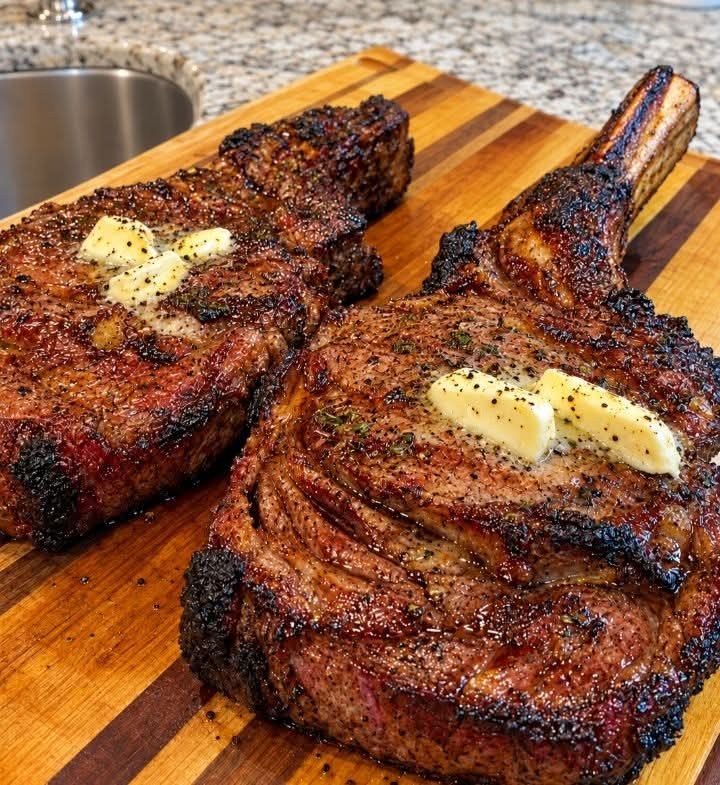
Reverse-seared tomahawk ribeye steaks with herb butter are one of the most impressive dishes you can serve at home. A tomahawk is a thick, bone-in ribeye with a long rib bone left attached, and the reverse-sear method gently brings the meat up to temperature in a low oven before a short, blazing-hot sear gives it a deep, crisp crust. The result is a steak that is evenly pink from edge to edge, rich with beefy flavor, and finished with a melting pat of garlicky herb butter.
This recipe is designed for anyone who wants a restaurant-quality steak dinner without the guesswork. It serves four, and while the active work is short, the oven does most of the heavy lifting. Because the reverse-sear method is forgiving and does not rely on split-second timing, it is a great choice for confident beginners as well as experienced home cooks who want reliable results for a special occasion.
Why you’ll love this reverse-seared tomahawk ribeye
- The low-temperature oven cooks the steak evenly, so you get a uniform pink center instead of a gray band under the crust.
- The thick cut of about two inches gives you a generous, juicy steak that feels like a true centerpiece.
- A short, very hot sear creates a dark, savory crust with very little time spent over the stove.
- The herb butter adds a fresh, garlicky richness that melts into the meat and the resting juices.
- The dramatic bone-in presentation makes it an easy choice for birthdays, anniversaries, or a relaxed weekend dinner with friends.
Ingredients
Serves 4. Prep time: 15 minutes (plus optional dry-brining). Cook time: 1 hour 15 minutes.
- 2 tomahawk ribeye steaks (about 2 to 2.5 lb / 1 to 1.1 kg each, 2 inches thick)
- 2 tbsp kosher salt
- 1 tbsp coarsely ground black pepper
- 1 tbsp garlic powder (optional)
- 2 tbsp avocado or other high-heat oil
- 4 tbsp unsalted butter, softened
- 1 tbsp chopped fresh thyme
- 1 tbsp chopped fresh rosemary or parsley
- 2 cloves garlic, minced
- Flaky sea salt, to finish
The quality of the beef matters most here. Look for steaks with bright red meat and generous marbling, which is the fine white fat running through the muscle that keeps the meat tender and flavorful. Ask your butcher for tomahawks cut about two inches thick, since thinner cuts will overcook before they develop a good crust. Use kosher salt rather than fine table salt, because its larger flakes season the meat more evenly and are easier to control. For the herbs, fresh thyme and rosemary offer the most aroma, but parsley is a milder, friendly alternative. Unsalted butter lets you control the final seasoning, and softening it to room temperature ensures it blends smoothly with the herbs and garlic.
Instructions
- Season the steaks. Pat the steaks completely dry with paper towels, then season generously on all sides with kosher salt, pepper, and garlic powder. For best results, place them uncovered on a rack in the refrigerator for 1 to 24 hours; this dry-brining step seasons the meat deeply and dries the surface for a better crust.
- Roast low and slow. Heat the oven to 225°F (110°C). Set the steaks on a wire rack placed over a baking sheet so air circulates around them, and roast until the internal temperature reaches 115-120°F (46-49°C) for medium-rare, about 45-60 minutes.
- Make the herb butter. In a small bowl, mix the softened butter with the thyme, rosemary or parsley, and minced garlic until evenly combined. Set aside at room temperature.
- Rest and heat the pan. Remove the steaks from the oven and let them rest for 5 to 10 minutes. Meanwhile, heat a cast-iron skillet or grill to very high heat until it is smoking lightly.
- Sear the steaks. Brush the steaks all over with the oil, then sear for 1.5 to 2 minutes per side until a dark, even crust forms. Also sear the edges and the fat cap, until the internal temperature reaches 128-130°F (53-54°C).
- Add the herb butter. Top each steak with pats of the herb butter and let them rest for 10 minutes, so the butter melts into the surface and the juices redistribute throughout the meat.
- Slice and serve. Cut the meat off the bone in long strips, slicing against the grain. Finish with a sprinkle of flaky sea salt and serve with the bone on the platter for a dramatic presentation.
Tips for the best results
- Use an instant-read thermometer. Guessing doneness by touch is unreliable with a steak this thick, and a quick check removes most of the risk.
- Pull the steaks about 5°C (9°F) below your target temperature, since they continue to rise in temperature while resting.
- Dry the surface thoroughly before searing. Moisture on the meat creates steam and prevents the crust from browning properly.
- Let your skillet or grill get very hot before the steaks go on. A cold pan produces a grey, steamed exterior instead of a crisp crust.
- Ventilate your kitchen well, since searing at high heat creates a lot of smoke. Turn on the hood fan and open a window if you can.
- Always slice against the grain. Cutting across the muscle fibers shortens them and makes each bite noticeably more tender.
Variations and substitutions
- Bone-in ribeye: A standard bone-in ribeye works well if tomahawks are hard to find, and it cooks in roughly the same way.
- Garlic-rosemary butter: Increase the rosemary and add a pinch of crushed red pepper for a warmer, more aromatic finish.
- Smoky spice rub: Replace the garlic powder with smoked paprika and a little brown sugar for a deeper, slightly sweet crust.
- Compound butter swap: Blend in a teaspoon of Dijon mustard or a little lemon zest for a brighter, tangier topping.
- Grill method: Set up a two-zone charcoal or gas grill, cook the steaks over indirect heat, then sear over the hot side for the same effect with a smoky char.
Serving suggestions
Serve these steaks with classic sides that complement rich beef without competing with it. Creamy mashed potatoes or buttery roasted fingerling potatoes soak up the herb butter and pan juices beautifully. A simple green vegetable such as blistered green beans, roasted asparagus, or a crisp arugula salad with lemon vinaigrette adds freshness and balance. For a more indulgent spread, add garlic bread or a wedge of creamy baked polenta. Pour a bold red wine, such as a Cabernet Sauvignon or a Syrah, alongside the meal. Arrange the steaks on a large wooden board with the bone standing up, and let guests carve their own portions at the table for a memorable, shareable centerpiece.
Storage and reheating
Store leftover steak in an airtight container in the refrigerator for up to three days. Slice the meat off the bone first, since it keeps better and reheats more evenly when separated. To reheat, warm the slices gently in a low oven at about 250°F (120°C) or in a covered skillet over low heat with a teaspoon of butter, just until warmed through. Avoid the microwave if you can, because it tends to make the meat rubbery and dry. Leftover herb butter can be wrapped in parchment and kept in the fridge for a week, or frozen for up to three months, and it is excellent on eggs, toast, or grilled vegetables.
Frequently asked questions
What is a tomahawk ribeye?
A tomahawk ribeye is a bone-in ribeye steak with the rib bone left long and exposed, which gives it its distinctive shape. It is cut thick, usually around two inches, and it is essentially a ribeye with the rib bone left intact. The bone adds visual drama and helps the meat stay juicy during cooking.
Why do you reverse-sear a steak?
Reverse-searing means cooking the steak slowly in a low oven first, then searing it at high heat at the end. This approach heats the meat evenly from edge to edge, so you avoid a thick band of overcooked gray meat under the crust. It also makes it much easier to hit your target doneness precisely.
Can I dry-brine the steaks overnight?
Yes, and it is highly recommended. Salting the steaks and leaving them uncovered in the refrigerator for one to twenty-four hours seasons the meat deeply and dries the surface, which helps create a better sear. Just pat them dry once more before cooking.
What internal temperature should a medium-rare steak reach?
For a medium-rare steak, pull it from the oven at 115-120°F (46-49°C), then sear it until the center reaches 128-130°F (53-54°C). Carryover heat will bring the steak to the final doneness during resting. Using an instant-read thermometer is the most reliable way to check.
Can I cook these steaks without a cast-iron skillet?
You can use any heavy-bottomed pan that holds heat well, or a hot outdoor grill. The key is to get the surface very hot before searing. A cast-iron skillet is ideal because it retains heat and produces an excellent crust, but a stainless-steel pan also works if it is preheated thoroughly.
Final thoughts
Reverse-seared tomahawk ribeye steaks with herb butter turn a simple piece of beef into a memorable, celebratory meal. With a little patience in the oven, a very hot sear, and a generous pat of garlicky butter melting over the top, you will have a dinner that looks and tastes special. Gather your favorite people, pour a good glass of red, and give this recipe a try the next time you want to make dinner feel like an occasion.