
Introduction
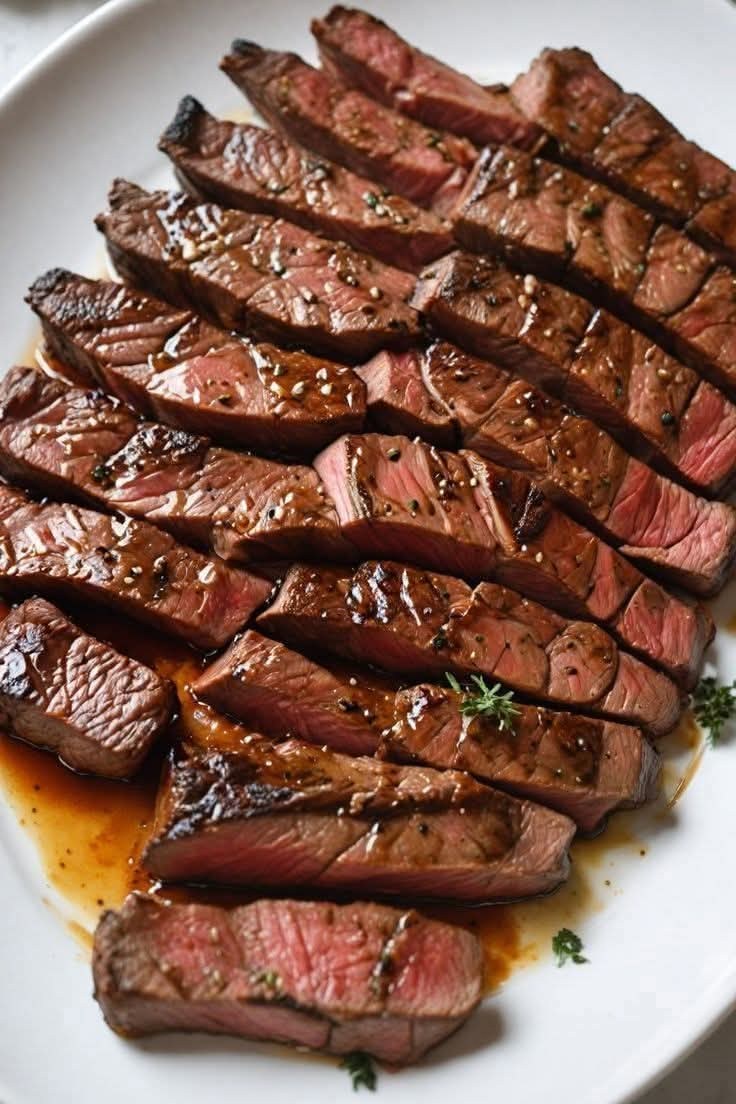
Sliced medium-rare steak is a classic dish that consistently delivers rich, beefy flavor alongside a tender, juicy texture that steak lovers crave. This recipe is designed for home cooks who want to replicate a restaurant-quality steak experience without complicated techniques or long cooking times. It’s ideal for intimate dinners or small gatherings where a perfectly cooked steak becomes the centerpiece.
Whether you’re preparing a meal for two or serving up to four guests, this straightforward method ensures a beautifully seared crust with a warm, pink center that melts in your mouth. The finishing touch of butter, garlic, and fresh herbs adds an aromatic richness that enhances the natural flavors of the beef, making it a memorable dish every time.
Why you’ll love this Sliced Medium-Rare Steak
- This recipe delivers a tender and juicy steak with a perfectly caramelized crust that locks in the flavors.
- It uses minimal ingredients and simple cooking techniques, making it accessible for cooks of all skill levels.
- The combination of butter and fresh herbs for basting infuses the steak with deep, savory notes without overpowering the natural beef flavor.
- Allowing the steak to rest before slicing ensures that all the delicious juices are retained, resulting in maximum succulence.
- The cooking times are adaptable, providing flexibility to accommodate different steak thicknesses and personal doneness preferences.
Ingredients
- 2 boneless beef steaks, about 10-12 oz / 280-340 g each (such as sirloin, strip, or tenderloin)
- 1 1/2 tsp kosher salt
- 1 tsp freshly ground black pepper
- 1 tbsp neutral oil
- 2 tbsp unsalted butter
- 2 garlic cloves, lightly crushed
- 2 sprigs fresh thyme or 1 tsp chopped parsley
Serves 2-4 | Prep Time: 10 minutes | Cook Time: 8-12 minutes
The key to this recipe’s success lies in selecting high-quality beef steaks with good marbling, such as sirloin, strip, or tenderloin cuts. Marbling—the thin streaks of fat within the muscle—helps keep the steak moist and flavorful during cooking. Kosher salt and freshly ground black pepper are essential for seasoning, enhancing the natural taste of the beef without masking it. Neutral oil, like canola or grapeseed, is chosen for its high smoke point, allowing a hot sear without burning. Butter and fresh herbs such as thyme or parsley add a fragrant, savory finish when used for basting, enriching the steak’s flavor profile beautifully.
Instructions
- Pat the steaks dry: Use paper towels to dry the steaks thoroughly. This helps achieve a better sear. Season all over with kosher salt and freshly ground black pepper.
- Heat the skillet: Place a heavy skillet over high heat and let it become very hot. Add the neutral oil and let it heat until shimmering.
- Sear the steaks: Place the steaks in the skillet and cook for 2-4 minutes per side, depending on thickness, until a deep brown crust forms.
- Add butter and aromatics: Add the unsalted butter, crushed garlic cloves, and fresh thyme to the pan. Tilt the pan slightly and use a spoon to baste the steaks with the foaming butter for about 1 minute.
- Check doneness: Continue cooking until the internal temperature reaches about 125-130°F (52-54°C) for medium-rare.
- Rest the steaks: Transfer the steaks to a cutting board and let rest for 5-10 minutes to allow juices to redistribute.
- Slice and serve: Slice the steaks across the grain into thick strips. Arrange on a platter, spoon over the pan juices, and scatter with chopped parsley if desired.
Tips for the best results
- Pat the steaks very dry before seasoning: Removing surface moisture is crucial for achieving a crisp, brown crust because moisture inhibits the Maillard reaction responsible for that desirable sear.
- Use a heavy skillet like cast iron: Cast iron retains and distributes heat evenly, ensuring consistent searing without hot spots that can cause uneven cooking.
- Baste with butter and herbs: This technique not only imparts rich, aromatic flavors but also helps keep the steak moist by continuously spooning hot butter over the surface during cooking.
- Use a meat thermometer: Checking internal temperature is the most reliable way to achieve perfect medium-rare doneness, avoiding guesswork and preventing overcooking.
- Let the steak rest properly: Resting for 5-10 minutes allows muscle fibers to relax and juices to redistribute, which means less juice loss when slicing and a juicier steak.
- Slice against the grain: Cutting perpendicular to the muscle fibers shortens them, making the steak easier to chew and enhancing tenderness.
Variations and substitutions
- Try fresh rosemary or oregano in place of thyme or parsley for a different herbal aroma and flavor during basting.
- Use olive oil or avocado oil instead of neutral oil to introduce subtle fruity or buttery notes to the sear.
- Add a pinch of smoked paprika to the seasoning mix for a gentle smoky depth that enhances the steak’s profile.
- Replace garlic with finely chopped shallots or green onions if you prefer a milder, sweeter aromatic component.
- Swap beef steaks with venison or bison for a leaner cut with a distinctive gamey flavor, adjusting cook times as needed.
Serving suggestions
Sliced medium-rare steak pairs wonderfully with a variety of complementary sides that balance its richness. Roasted vegetables like asparagus, carrots, or Brussels sprouts add earthiness and texture. Creamy garlic mashed potatoes provide a comforting, smooth contrast to the steak’s robust flavor. For freshness, a crisp green salad with a light vinaigrette brightens the plate. Sauces such as chimichurri or horseradish cream cut through the richness while enhancing flavor complexity. For an indulgent touch, consider serving with a creamy mushroom sauce or a dollop of blue cheese butter, both of which elevate the steak to a gourmet level.
Storage and reheating
Leftover sliced steak can be stored in an airtight container in the refrigerator for up to three days, keeping it safe and flavorful. When reheating, avoid high heat to prevent overcooking and drying out the meat. Gently warm the steak slices in a skillet over low heat, adding a splash of beef broth or water to help maintain moisture. Alternatively, use a microwave on low power in short intervals, covering the steak to trap steam. Proper reheating preserves tenderness and juiciness so you can enjoy leftovers almost as much as freshly cooked steak.
Frequently asked questions
How do I know when my steak is medium-rare?
The most accurate way to determine medium-rare doneness is by measuring the internal temperature with a meat thermometer. Aim for 125-130°F (52-54°C) inserted into the thickest part of the steak. At this temperature, the steak will be warm and slightly springy to the touch, with a pink, juicy interior. Visual cues like a deep brown crust and slight resistance when pressed can help, but temperature is the most reliable indicator.
Can I use frozen steaks for this recipe?
While fresh steaks yield the best texture and flavor, frozen steaks can be used if thawed properly. Thaw frozen steaks completely in the refrigerator—this slow thawing preserves texture and prevents bacterial growth. Before cooking, pat the steaks very dry to remove excess moisture that can interfere with searing. Avoid cooking from frozen directly, as it leads to uneven cooking and a less desirable crust.
Why should I rest the steak before slicing?
Resting the steak after cooking is essential because it allows the muscle fibers to relax and the juices to redistribute evenly throughout the meat. If sliced immediately, the juices tend to run out, leaving the steak drier and less flavorful. Resting for 5-10 minutes ensures that each bite is juicy and tender, maximizing enjoyment.
What if I prefer my steak more or less done?
You can easily adjust cooking times and target temperatures based on your preferred doneness. For rare, remove the steak at 120°F (49°C); medium at 135°F (57°C); and medium-well at 145°F (63°C). Use a thermometer to monitor temperature closely, and remove the steak from the heat a few degrees before the target temperature to account for carryover cooking, where residual heat raises the internal temperature slightly as the steak rests.
Can I cook the steak without butter?
Yes, searing steaks with just oil is possible and will produce a good crust. However, butter adds richness and depth of flavor that oil alone cannot provide. Additionally, butter helps with basting, coating the steak in flavorful fat and aromatics. For a dairy-free alternative, increase the amount of oil and add fresh herbs during cooking to infuse flavor.
Final thoughts
Sliced medium-rare steak is a timeless dish that is surprisingly easy to master in your own kitchen. With just a handful of quality ingredients and simple, precise steps, you can create a steak that is tender, juicy, and bursting with flavor—rivaling your favorite steakhouse. This recipe invites you to enjoy a delicious, satisfying meal that impresses every time. Give it a try for your next dinner and savor the rewarding taste of perfectly cooked steak.