
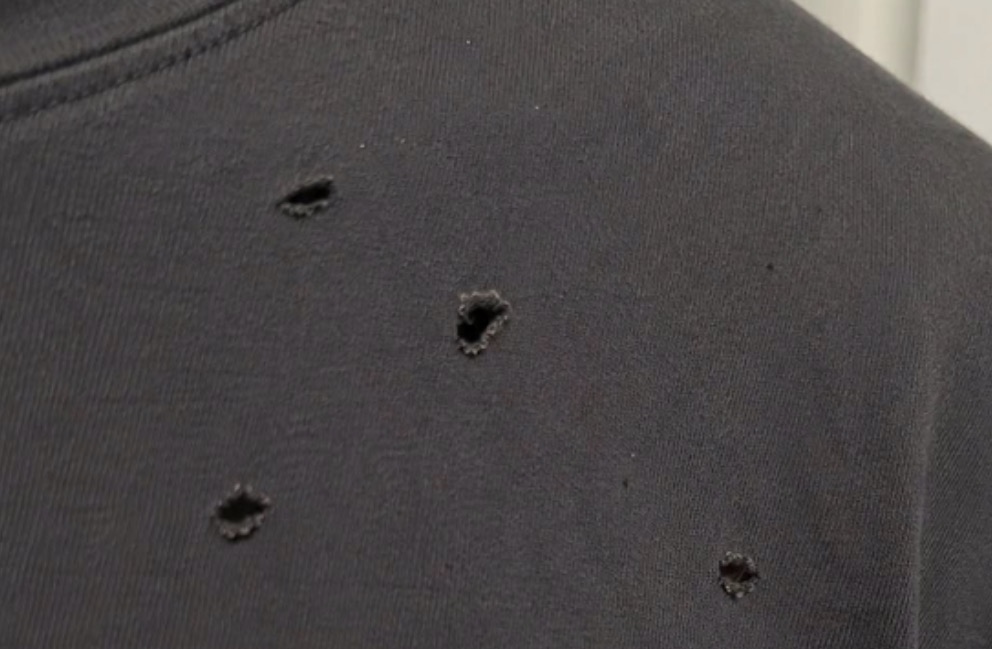
What’s Making Holes in Your Clothes? The Common Causes and Easy Ways to Prevent Them
There’s nothing more frustrating than pulling on a favorite shirt only to discover a tiny hole near the hem.
You wash it carefully. You put it away. You wear it again a few days later—and somehow, there’s another little hole.
What happened?!
If this sounds familiar, you’re definitely not imagining it. Small holes in clothing can have several different causes, and moths are only one possibility.
In fact, if those little holes keep appearing in the same place—especially around the lower front of your shirts—the culprit may have nothing to do with insects at all.
The good news is that once you figure out what is damaging your clothes, the solution can be surprisingly simple.
Why Do Little Holes Keep Appearing in My Clothes?
The location, size, and pattern of the damage can provide useful clues.
A cluster of tiny holes around the lower front of a T-shirt may point toward repeated friction. Damage that appears after washing could indicate a snag from a zipper, hook, or rough part inside the washing machine.
And if clothing stored away in a closet is developing irregular holes, fabric pests become more worth investigating.
Here are some of the most common causes.
1. Friction From Counters and Tables
This is one of the most overlooked causes of tiny holes in shirts.
Think about everything you do during the day while your shirt is rubbing against a hard surface.
You might be:
Preparing food
Washing dishes
Working at a counter
Sitting at a desk
Leaning against a kitchen island
Buckling into a car
Carrying bags
Doing household chores
The lower front of your shirt can repeatedly press and rub against a countertop, desk, table edge, or other surface.
One individual contact may do almost nothing.
But thousands of tiny movements over time can gradually weaken the fabric fibers.
Eventually, a tiny hole appears.
Why Lightweight Shirts Can Be Especially Vulnerable
Lightweight cotton and jersey fabrics can be susceptible to repeated abrasion.
That’s why you might notice the same problem happening with several favorite T-shirts.
You aren’t necessarily washing them incorrectly.
You may simply be wearing them in a way that repeatedly puts the same section of fabric under stress.
How to Reduce Friction Damage
Start paying attention to where the front of your shirt comes into contact with surfaces during the day.
If you regularly lean against a kitchen counter, try to avoid pressing the fabric against rough edges whenever possible.
Wearing an apron while cooking or doing household chores can also create a simple barrier between your clothing and the counter.
And here’s a useful clue:
If multiple shirts develop holes in almost exactly the same place, look for a repeated source of friction.
2. Your Washing Machine May Be Catching the Fabric
Laundry can be surprisingly rough on clothing.
A small snag or tear can happen when fabric catches on a rough edge, damaged component, zipper, hook, or another object inside the washer.
If you keep discovering holes after washing your clothes, don’t immediately assume the fabric is defective.
Take a closer look at your laundry routine—and inspect the machine.
A Few Simple Laundry Habits Can Help
Try these habits before your next load:
Turn delicate clothing inside out.
Close zippers before washing.
Fasten hooks and other closures.
Use mesh laundry bags for delicate items.
Avoid overloading the washer.
Separate delicate fabrics from garments with rough hardware.
If the same type of clothing repeatedly comes out of the wash with new holes, carefully inspect the inside of the washer drum for anything sharp, rough, or damaged.
One tiny rough edge can cause a surprising amount of damage over time.
3. The Dryer Can Contribute to Clothing Damage
The washing machine isn’t the only appliance that can put stress on your clothes.
Your dryer can also contribute to wear.
Heat, tumbling, and repeated drying cycles can gradually weaken some fabrics.
That doesn’t mean you need to give up your dryer.
Instead, check the care label on your clothing and use a gentler temperature when appropriate.
For delicate garments, air-drying can be a simple way to reduce unnecessary wear.
And if a particular shirt seems especially fragile, treating it gently from washing through drying may help extend its life.
4. Zippers and Fasteners Can Snag Your Clothes
Sometimes the culprit isn’t the washing machine at all.
It may be another garment.
A zipper can catch on a shirt and pull at the fabric during washing or wearing. Bras, hooks, Velcro, metal buttons, and other fasteners can create similar problems.
The damage can be tiny at first.
One little snag becomes a weak point.
Then another wash cycle or another day of normal wear turns that weak point into a hole.
Try This Before Your Next Load
Try This Before Your Next Load
Before putting clothes into the washer:
Close zippers.
Fasten hooks.
Turn delicate garments inside out.
Keep fragile fabrics away from rough hardware when possible.
Use a mesh laundry bag for especially delicate pieces.
It takes only a few extra seconds, but those little habits can help reduce unnecessary snags.
5. Moths and Other Fabric Pests
Of course, insects can damage clothing.
Moths are a real possibility, particularly when clothing is stored for long periods.
Certain clothes moth larvae can damage natural fibers such as wool and other animal-based materials.
But if you’re trying to determine whether moths are responsible, don’t focus on a single hole.
Look for additional clues.
You might notice:
Multiple irregular holes
Damage appearing on stored clothing
Shed larval skins
Webbing or debris in dark storage areas
Damage to wool, cashmere, fur, or other susceptible materials
Closets and drawers that remain dark and undisturbed can provide favorable conditions for fabric pests.
So if your clothing is being damaged while sitting quietly in storage, it’s worth investigating beyond the washing machine.
6. Carpet Beetles Can Damage Clothing Too
Moths aren’t the only fabric pests that deserve attention.
Carpet beetle larvae can also damage natural fabrics.
They’re attracted to materials containing animal fibers and may sometimes be found in closets, underneath furniture, or around areas where lint and hair accumulate.
If your clothing damage continues even after you’ve changed your laundry routine, take a look around your storage areas.
Regular vacuuming can help remove lint, hair, and other material that larvae may feed on.
7. Rough Furniture and Hardware
Sometimes a hole begins with something so ordinary that you never notice it.
A rough chair edge.
An exposed screw.
A damaged countertop.
A backpack strap.
A sharp desk edge.
A piece of furniture can catch your clothing during everyday activities and create a tiny snag.
The damage may be so subtle that you don’t feel it happening.
That’s why the location of the hole can be such an important clue.
Look at Where the Damage Happens
Ask yourself:
Where exactly is the hole?
Is it always near the bottom front of your shirt?
Does it appear near the same seam?
Does it happen around the waist?
Is it on the side where your bag rests?
Does it only happen to clothing you wear while cooking or working at a desk?
The more consistent the location, the easier it may be to identify the source.
Why Are the Holes Often Near the Bottom of Shirts?
This is one of the most useful clues.
Small holes around the lower front of T-shirts are frequently associated with repeated contact between the fabric and surfaces such as countertops or desks.
Here’s what can happen.
Your shirt gets caught between your body and the edge of a surface. As you move around, the fabric repeatedly rubs against that edge.
One movement isn’t enough to cause obvious damage.
But repeated friction gradually weakens the fibers.
Eventually, you see that familiar little hole.
And suddenly, all those shirts with matching holes don’t seem quite so mysterious!
If your shirts consistently develop holes in the same location, consider friction before assuming you’ve got an insect infestation.
How I Reduce Clothing Damage
Once you know what to look for, preventing these little holes becomes much easier.
I pay particular attention to the places where clothing repeatedly comes into contact with rough surfaces.
Protect Shirts During Household Chores
If you’re spending time leaning over a counter while cooking, washing dishes, or cleaning, consider wearing an apron.
It’s such a simple habit, but it can put a protective layer between your shirt and the surfaces you’re working against.
Be More Careful With Delicate Fabrics
Lightweight fabrics deserve a little extra attention.
Turn them inside out before washing, use a gentle cycle when appropriate, and avoid washing them alongside garments covered in rough zippers or hardware.
Inspect Your Washer
If holes continue appearing despite changing your laundry habits, inspect the inside of the washing machine.
Run your hand carefully over accessible surfaces to check for anything that feels unusually rough or sharp.
If you find a damaged component, address the problem before continuing to wash delicate clothing in the machine.
Pay Attention to Your Storage Areas
If clothing is developing holes while sitting untouched in a closet or drawer, look for signs of fabric pests.
Check dark, undisturbed areas and pay attention to the condition of stored wool, cashmere, fur, and other susceptible materials.
Regular cleaning and vacuuming can also help keep storage areas free of lint and other debris.
A Simple Way to Figure Out What’s Causing the Holes
Instead of immediately assuming the worst, try becoming a clothing detective.
The next time you find a hole, ask yourself a few questions.
Where Is It?
The location may point toward friction from a counter, desk, chair, bag, or another surface.
When Did You Notice It?
If you only discover holes after laundry day, investigate the washer, dryer, and other garments in the load.
What Fabric Is Affected?
If natural animal fibers are being damaged while stored, fabric pests may deserve more attention.
Are Multiple Clothes Affected?
One damaged shirt could simply have been snagged.
Several garments developing similar damage may provide a stronger clue about the cause.
Does the Damage Keep Appearing in the Same Spot?
This may be one of the most useful clues of all.
A consistent location often points toward a consistent source of friction or contact.
How to Tell Friction Damage From Fabric-Pest Damage
There’s no single visual rule that identifies every hole, but the overall pattern can provide useful clues.
Repeated holes in the same location on frequently worn shirts: friction is worth considering.
Damage appearing on clothing while it is stored: fabric pests become more plausible.
Holes appearing after laundry cycles: inspect the washer, dryer, zippers, hooks, and other fasteners.
Damage near a particular piece of furniture or hardware: look for a snagging or abrasive surface.
The important thing is not to focus on one hole in isolation.
Look for a pattern.
Frequently Asked Questions
Why do my T-shirts keep getting tiny holes near the bottom?
Repeated friction is one possible explanation. The lower front of a shirt can rub against countertops, desks, tables, and other surfaces during everyday activities.
Are moths always responsible for holes in clothes?
No. Moths are only one possible cause. Friction, laundry equipment, zippers, fasteners, rough furniture, and other fabric pests can also damage clothing.
Can a washing machine make holes in clothes?
Yes. Fabric can catch on rough or damaged parts of a washer, as well as zippers, hooks, and other objects in the load.
Can a dryer damage clothing?
Repeated exposure to heat and tumbling can contribute to wear in some fabrics. Following care-label instructions and using gentler drying methods for delicate clothing can help reduce unnecessary stress.
How can I protect clothes from zippers?
Close zippers before washing and keep delicate clothing away from garments with rough hardware when possible. Turning delicate items inside out can also help.
What should I do if I suspect moths?
Look beyond the holes themselves. Check stored clothing and dark, undisturbed areas for additional signs such as shed material, webbing, or debris. Pay particular attention to susceptible natural fibers.
Can carpet beetles damage clothing?
Yes. Carpet beetle larvae can damage natural fabrics and may be found in areas where lint, hair, and other material accumulate.
Why do all my shirts seem to get holes in the same place?
A repeated location is an important clue. If the holes consistently appear near the lower front of your shirts, repeated friction against counters, desks, or other surfaces may be contributing to the damage.
The Tiny Hole May Be Telling You Something
That little hole in your favorite shirt can be incredibly annoying.
But before you blame the moths—or decide that your washing machine is destroying everything you own—take a closer look at the pattern.
Where the hole appears can tell you a lot.
If it’s repeatedly showing up near the lower front of your shirts, think about friction.
If it appears after washing, inspect your laundry routine and equipment.
If stored clothing is being damaged, investigate possible fabric pests.
And if a zipper, chair edge, countertop, or other piece of hardware keeps coming into contact with the same area of fabric, you’ve potentially found your culprit.
The good news is that many of these causes are surprisingly easy to address.
Sometimes preventing those mysterious little holes doesn’t require a new wardrobe at all.
It just requires figuring out what your clothes are rubbing against, catching on, or being exposed to—and making one small change.
And honestly, saving a favorite shirt from the next mysterious hole feels pretty satisfying!