
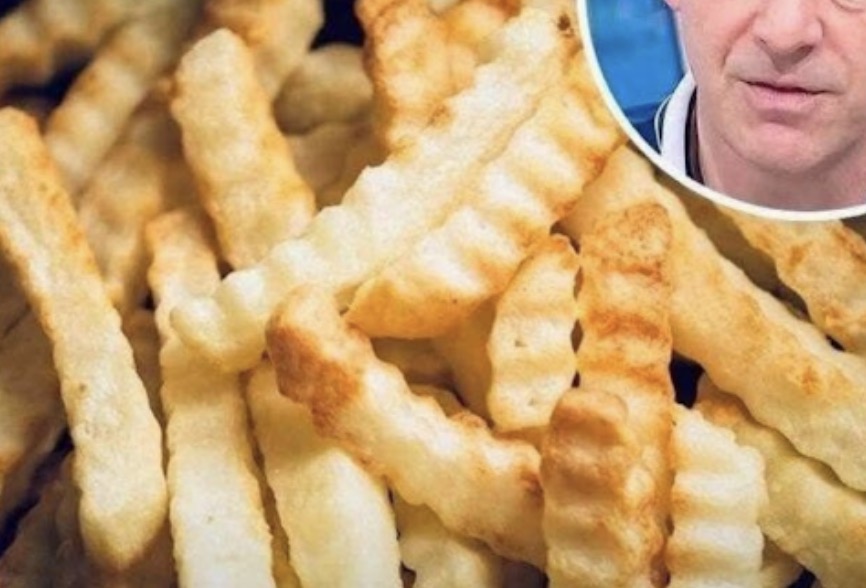
Experts Caution Against Using Air Fryers Instead of Ovens: Here’s What to Know
Air fryers have gone from a trendy countertop gadget to an everyday kitchen favorite. They’re fast, convenient, relatively easy to clean, and capable of giving everything from potatoes to chicken a deliciously crisp exterior with little added oil.
But there’s an important distinction worth remembering: an air fryer is a useful cooking appliance, not necessarily a complete replacement for your oven.
That doesn’t mean you need to give up your air fryer. Far from it! The trick is knowing what it does well, where an oven has an advantage, and how the foods you choose to cook can affect the overall healthfulness of your meals.
Why Are Air Fryers So Popular?
The appeal is pretty obvious.
An air fryer uses rapidly circulating hot air to cook food and brown its surface, producing a crisp texture without requiring the food to be submerged in a large amount of oil.
For busy households, that can make cooking feel much easier.
Some of the biggest advantages include:
Faster cooking: Small portions often cook more quickly than they would in a conventional oven.
Less added oil: Many foods can become crisp with little or no additional oil.
Convenience: Preheating and cleanup are often relatively simple.
Crispy texture: The circulating hot air is particularly effective for browning and crisping.
Small portions: An air fryer is handy when you don’t want to heat a large oven for a modest amount of food.
And let’s be honest—when you’re hungry on a busy evening, being able to get dinner on the table quickly is a pretty wonderful thing!
Why Experts Say an Air Fryer Shouldn’t Automatically Replace Your Oven
The concern isn’t that air fryers are inherently dangerous. Rather, the appliance has limitations, and the way people use it matters.
An air fryer can be excellent for certain foods and portions, while a conventional oven remains more practical for other cooking jobs.
1. Small Baskets Can Make Overcrowding a Problem
One of the biggest mistakes people make with air fryers is trying to fit too much food into the basket.
When food is packed tightly together, hot air can’t circulate as effectively around every piece. The result can be food that’s browned in some areas but undercooked or less crisp in others.
That’s why many air-fryer recipes recommend arranging food in a single layer and cooking in batches when necessary.
A conventional oven, particularly with multiple racks or large baking trays, offers considerably more space for family-sized meals.
2. An Air Fryer Isn’t Designed for Every Type of Meal
Think about what you’re making.
A basket-style air fryer is fantastic for things such as:
Vegetables
Chicken pieces
Potatoes
Fish fillets
Small portions of meat
Frozen foods
Reheating certain leftovers
But imagine trying to prepare a large casserole, a big roast, several loaves of bread, or an entire holiday dinner in one.
That’s where the oven still earns its place.
3. Baking Can Require More Specialized Space
Some air fryers have impressive baking capabilities, and certain models can handle cakes, muffins, breads, and other baked goods.
But capacity and airflow can make baking different from using a conventional oven.
Large cakes, sheet-pan recipes, casseroles, multiple trays of cookies, and other spacious preparations may be much easier in a traditional oven.
So rather than asking which appliance is “better,” it makes more sense to ask:
Which appliance is better suited to what I’m cooking right now?
The Bigger Health Question May Be What’s on Your Plate
Here’s where the conversation gets especially important.
An air fryer can reduce the amount of added oil needed to make certain foods crispy. But using an air fryer doesn’t automatically turn every food into a healthy choice.
If someone mainly uses an air fryer for frozen fries, breaded chicken, nuggets, packaged snacks, or other highly processed foods, the appliance itself doesn’t change the nutritional profile of those foods.
Depending on the product, processed foods can be relatively high in sodium, saturated fat, refined carbohydrates, or other ingredients that are worth limiting as part of an overall balanced diet.
On the other hand, an air fryer can also be a convenient way to prepare fresh vegetables, fish, chicken, potatoes, and other minimally processed ingredients.
The food matters just as much as the appliance.
What About Acrylamide?
What About Acrylamide?
Acrylamide is another reason high-temperature cooking sometimes receives attention.
It can form naturally when certain carbohydrate-containing foods are cooked at high temperatures, particularly during browning processes such as frying, roasting, and baking.
Foods such as potatoes are a familiar example.
The important point is not to conclude that air-fried food is automatically dangerous.
Instead, it’s sensible to avoid excessively dark or burnt food and use reasonable cooking temperatures and times. Following the appliance manufacturer’s instructions and recipe guidance can help you avoid unnecessary over-browning.
A little browning is not the same as burning
That golden, crispy surface many people love is part of the appeal of an air fryer.
The goal isn’t to eliminate browning altogether. It’s to avoid routinely cooking food until it’s excessively dark, charred, or burnt.
Air Fryer vs. Oven: When Should You Use Each?
Rather than choosing one appliance and abandoning the other, think of them as two different tools.
Reach for the air fryer when you want:
A quick meal or side dish
Small portions
Crispy vegetables
Crisp potatoes
Reheated foods that benefit from a crunchy exterior
Small pieces of chicken or fish
A convenient way to cook without using much added oil
The oven is often more practical for:
Family-sized meals
Large casseroles
Cakes and large baked goods
Bread
Large roasts
Multiple dishes at once
Foods that require more space
Recipes designed around conventional oven temperatures and baking times
And sometimes the answer is simply whichever appliance makes the meal easiest without compromising how it should be cooked.
Smart Air-Fryer Cooking Tips
Want to get better results from your air fryer? A few simple habits can make a noticeable difference.
Don’t overcrowd the basket
Give the hot air room to move around the food. If you’re cooking a large quantity, work in batches instead of stacking everything into one crowded layer.
Shake or turn food when appropriate
For foods such as fries or vegetables, shaking the basket or turning the pieces partway through cooking can encourage more even browning.
Watch the cooking time
Air fryers can cook differently from one another, even when they’re set to the same temperature. Start checking food toward the earlier end of the recommended cooking range.
Choose fresh ingredients more often
An air fryer can be a great tool for making fresh vegetables, lean proteins, and other simple ingredients more appealing.
Try tossing vegetables with a small amount of oil and seasoning before air frying. The result can be wonderfully crisp around the edges while remaining tender inside.
Don’t forget your oven
There’s absolutely no need to retire your oven just because you bought an air fryer!
Keep both appliances available and use each where it makes the most sense.
Can an Air Fryer Replace an Oven?
For some people and some recipes, an air fryer may handle a surprisingly large portion of everyday cooking.
But it isn’t a universal replacement for a conventional oven.
Capacity, cooking method, food type, and recipe design all matter. A small basket simply can’t perform the same role as a large oven when you’re preparing a substantial meal.
The best approach is to treat the air fryer as an additional cooking tool rather than a replacement for everything else.
Frequently Asked Questions
Is cooking with an air fryer healthier than frying?
It can be, particularly when air frying allows you to use substantially less added oil than deep-frying. However, the overall nutritional value still depends heavily on what you’re cooking.
Can you cook everything in an air fryer?
No. Many foods can be adapted successfully, but some recipes are better suited to a conventional oven because of their size, cooking method, or need for specialized bakeware.
Does air frying create acrylamide?
Acrylamide can form when certain carbohydrate-rich foods are cooked at high temperatures, including during air frying. Keeping foods from becoming excessively browned or burnt can help reduce unnecessary exposure.
Are air fryers dangerous?
Used according to the manufacturer’s instructions, air fryers are generally considered convenient household cooking appliances. As with any cooking equipment, proper use, adequate ventilation, and attention to hot surfaces are important.
Should I stop using my air fryer?
Not at all! There’s no need to throw your air fryer into the back of the cupboard.
Instead, use it thoughtfully. It can be an especially convenient appliance for smaller portions and foods where crisping is desirable.
General Information
Topic: Air fryer cooking and conventional oven use
Best approach: Use each appliance according to the food, quantity, and recipe
Main advantage of an air fryer: Fast, convenient cooking with effective surface browning and potentially less added oil
Main limitation: Smaller capacity and less suitability for some large or traditional oven recipes
Health consideration: The nutritional quality of the food itself remains important, regardless of the cooking appliance
Final Takeaway
Air fryers deserve their place in the modern kitchen—but they don’t have to replace the oven.
They’re wonderfully convenient for small portions, quick meals, crisp vegetables, potatoes, reheating, and plenty of other everyday foods. At the same time, a conventional oven remains invaluable for large meals, baking, roasting, casseroles, and recipes that need more space.
And perhaps that’s the most useful way to look at it.
You don’t have to choose sides!
Use the air fryer when speed and crispiness are what you’re after. Use the oven when you need capacity, versatility, or a cooking environment better suited to the recipe.
Most importantly, focus on the foods you’re preparing, not just the appliance you’re using. Fresh vegetables, whole foods, and balanced meals can make either cooking method part of a sensible kitchen routine.
So keep that air fryer on the counter—and keep your oven ready, too. The smartest kitchen isn’t necessarily the one with only one appliance. It’s the one where you know how to use each tool well.